
Q & A with City Council Member Tim Burgess

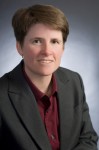
Tim BurgessWalking in Seattle is running a series to showcase the perspectives of prominent walkers in the city. This week’s Q&A is with Seattle City Council Member Tim Burgess:

Walking in Seattle: Where is your favorite place in the city go for a walk?

Tim Burgess: I do my exercise walking in my Queen Anne neighborhood, usually very early in the morning. I have a 3.1 mile loop that I walk three or four days a week, most of it along park boulevards that loop around the hill.

I also walk downtown almost every day as I move from meeting to meeting; walking is often quicker than checking out a car from the City motor pool, driving, and finding a place to park.

WiS: What do you like most about walking in the city of Seattle?

Burgess: We have a great cityscape, lots of parks and boulevards, and urban density that makes walking fairly easy. Joleen and I can walk from our house to nearly all of our favorite shops and restaurants, our church, and friends in our neighborhood. But not all neighborhoods in Seattle are so amenable to walking because they lack sidewalks, aren’t perceived to be safe, or don’t have the level of density that makes walking attractive.

WiS: What is the top thing you’d like to see improved for walking in the city of Seattle?

Burgess: More sidewalks in those neighborhoods that don’t have them, better pedestrian lighting, better way finder signs, especially in the greater downtown area, and more traffic calming efforts like our very successful road reconfigurations.

WiS: One last question – be honest, do you wait for the crosswalk signal?

Burgess: Absolutely. I think all Council members are quite sensitive to obeying the crosswalk signals all the time! We certainly wouldn’t want to get “caught” crossing against the signal.

If you’d like to nominate a local walker to be included in this Q & A series, or volunteer to participate, please use our contact form.

Share

Greenwood alley makeover tomorrow

Tired of potholes in your alley? Check out this do-it-yourself project these Greenwood residents are doing (via Feet First):

Thirteen Greenwood neighbors in Seattle are giving their alley a makeover. After only 3 months of conversation (not a whole lot of process in Seattle terms), these neighbors have come together with $450 ($35 each) to pour crushed rock along the alley between 95th and 97th in the Seattle Greenwood neighborhood.

The folks in this neighborhood knew it would probably be many years before the city would fix the potholes and the puddles of water that accumulate during a rainfall, so they decided to take matters into their own hands. And, without a large transportation budget, they are making it a lot easier for people to use this public right of way.

On Saturday, May 14th at 12pm at the alley at 95th and 97th between Phinney and Dayton, residents are coming together to spread the crushed rock along their alley. Alleys are gaining popularity as their appearance–narrow spaces that move people, create connections, which inspire a new way for people to see their neighborhood. Come out and learn about this neighborhood’s DIY transportation improvement that will inspire you to do some street repair in your neighborhood!

Share

Stairway wiped out by mudslide, repaired by SDOT

A stairway near Thornton Creek had been wiped out by heavy rains several weeks ago. SDOT engineers quickly repaired the stairway and SDOT Blog has a few pictures that show the before and after.

Share

Walk & Talk in Capitol Hill with Sally Clark

Sally Clark (recently interviewed by Walking in Seattle) will be leading a walk through Capitol Hill as part of Feet First‘s quarterly Walk & Talk series. The walk will stop at three places in the neighborhood to highlight recent changes that have made the area more walkable. The livability enhancements featured include green space, multi-modal investments, and mixed use and compact development.

The walk starts at 5:30 on Tuesday, March 24 at the Odd Fellows Building (entry to the right of the Odd Fellows Cafe) at 1525 10th Avenue. Tickets can be purchased online for $7 for members and $10 for non-members online – the cost is higher if purchased the day of the walk.

View Larger Map

A reception will follow at the Baltic Room at 1207 Pine St.

Share

All intersections legal for crossing

As many of you know, pedestrian crosswalks exist at every interesction in Washington, whether marked or not. But what about T-intersections? And what about odd-angle intersections? And, what about intersections where pedestrians are expressly forbidden? Well, the last one isn’t a legal crosswalk, but the other two are.

According to SDOT:

Legal pedestrian crosswalks exist at every intersection, including three way and odd angle intersections, whether the crosswalk is marked or unmarked. A marked crosswalk normally indicates a preferred pedestrian crossing point which is the safest place for a pedestrian to cross. Perhaps it is a location where lighting or visibility is best among a number of options, or where the potential for pedestrian-vehicle conflicts is lowest.

Safe crossings of streets are dependent upon good driver behavior and good pedestrian behavior. Any situation can become a dangerous one if poor driving or improper pedestrian or driver behavior is involved. While SDOT focuses on both traffic operations and the physical environment, everyone plays a role in pedestrian safety.

So, while three-way intersections and odd-angle intersections may not be particularly common, and while people may not cross at some intersections very frequently, they’re all legal crosswalks.

Share

Roadways safer than ever in 2010 but not safe enough

The Washington Traffic Safety Commission reports that there were fewer traffic fatalities in 2010 than any year on record. SDOT Blog shares how the Seattle Department of Transportation works to make streets safer:

SDOT frequently partners with the Washington Traffic Safety Commission to help improve safety on Seattle streets. We are currently working with the Commission on the Aurora Traffic Safety Project which, as previously reported, has been able to reduced collisions on Aurora Avenue North by more than 20 percent in the past year. From 2006 to 2008, SDOT and the Traffic Safety Commission partnered on the Rainier Corridor Traffic Safety Project which improved safety on Rainier Avenue in Southeast Seattle. SDOT also seeks Traffic Safety Commission grants annually to fund school zone flashing beacons. Flashing beacons have been shown to be one of the most effective ways to improve safety in school zones and can currently be found at more than 35 Seattle schools.

There is still a long way to go to reach Target Zero, a goal shared by transportation agencies in Washington state. SDOT encourages everyone to follow traffic laws and try to get around safely, but many roads in the city are still unsafe by design. Of all roadway users, pedestrians are most likely to die in a collision and dozens have been killed in the past five years. Asking drivers to slow down isn’t going to fix everything. To take safety seriously, SDOT needs to focus on designing roadways safer.

One way to do that is to continue implementing road diets where possible and looking at other ways to slow drivers down. A pedestrian struck by a vehicle traveling 40 mph is 85% likely to die, whereas a pedestrian struck at 30 mph has a 45% chance of death. Look at the map of pedestrians killed in the past five years and take note of the streets where pedestrians have been killed. How many of these fatalities happened on a street with at least two lanes of traffic in one direction?

Share

SDOT counting peds and bikes this week

From SDOT Blog:

SDOT will be conducting pedestrian and bicycle volume counts at more than 50 locations across Seattle from May 10th to May 12th as part of the National Bicycle & Pedestrian Documentation Project.

Following a consistent, nationally recognized methodology will improve the quality and consistency of our data, and also increase the frequency with which we collect this type of data. The information we collect will document current levels of walking and biking, help us measure our progress towards increasing the number of people who walk and bike, and help make the case for additional investments. We plan on collecting pedestrian and bicycle volume information for times per year with our next count taking place in July.

Share

Improvements on Aurora

As part of the Aurora Traffic Safety project, which has been reviewed here (part 1, part 2), the intersection with Halladay St will be improved. This intersection has one of the highest amounts of crashes for motor vehicles (nearly 20 per year), and also poses danger to pedestrians due to vehicles turning off Aurora at a high rate of speed. The new traffic island at this intersection will be constructed with concrete and feature new curb ramps and a better walking surface for pedestrians.

Additionally, radar speed limit signs will be installed at five locations along Aurora. These signs have been shown to reduce vehicle speeds by 3-5 miles per hour. The high speed of traffic along Aurora is one reason why it has so many fatalities.

Share

Walk at Colman Park this Saturday

For those of you looking to get out and walk this weekend, there’s an opportunity to join a guided walk this Saturday morning.

Joan Burton and Duse McLean will be doing their monthly walk from their book, Urban Walks, 23 Walks through Seattle’s Parks and Neighborhoods, Saturday, May 7.

With the good weather, we thought it would be a good time to do a walk in one of our favorite parks, so please join us for this month’s walk in Colman Park, on the shore of Lake Washington.

Colman Park is one of Seattle’s beautiful Olmsted parks, designed by the Olmsted Brothers Firm early in the 20th century. We’ll meet at the lower end of the park, along the shore of Lake Washington Boulevard, and walk up through the park to the top side of the park at 31st Avenue So.and end up back down at the lake shore. The walk isn’t long, but it is uphill. For those wanting a longer walk, Mt. Baker Park is just a little south of Colman Park and you can easily add it on after our walk.

Meet at 10 a.m. in the parking lot along the lake shore, a little south of the I-90 floating bridge: 1800 Lake Washington Blvd.

Free! No reservations – just please join us.

Share

Q & A with City Council Member Sally Clark

Sally ClarkWalking in Seattle is running a series to showcase the perspectives of prominent walkers in the city. This week’s Q&A is with Seattle City Council Member Sally Clark:


Walking in Seattle: Where is your favorite place in the city go for a walk?

Sally Clark: Depends on whether I’m with or without Bill, my dog.

If I’m with Bill, then a walk around Seward Park or up through Myrtle Edwards is my choice. However, he really likes a walk through the UW campus, too. The best walk event is when I have an un-programmed Thursday night. Bill and I can walk from our house in Brighton (south of Seward Park) to Columbia City to meet my partner for dinner. That’s a great neighborhood walk.

If I’m without Bill, perhaps skipping out of the office for fresh air, then a walk down to Pioneer Square for lunch at the Elliott Bay Café or something from Caffe Umbria.

Walking in Seattle: What do you like most about walking in the city of Seattle?

Sally Clark: I like the variety of options. You can do architecture walks in Pioneer Square or Capitol Hill or Magnolia. You can do a “poke around Pike Place Market” walk. You can wander South Lake Union down to the new park at the lake. In all of these you’re surrounded by what we’ve built. Or, you could opt to get lost in nature at Discovery Park, in Dead Horse Canyon or at Westcrest.

Walking in Seattle: What is the top thing you’d like to see improved for walking in the city of Seattle?

Sally Clark: I don’t think is particular just to Seattle. Those of us who drive have to remember we’re not in a race. Stopping to allow someone to cross is not a sign of weakness. Most of us are not brain surgeons on our way to emergency rooms.

Walking in Seattle: One last question – be honest, do you wait for the Crosswalk light?

Sally Clark: Official answer: Yes.

If you’d like to nominate a local walker to be included in this Q & A series, please use our contact form.

Share
